
Once you have picked the right component in our linear shafts vs. posts vs. rotary shafts selection guide, the next question is how to specify it. This guide covers the specification decisions that set a shaft or post’s performance and life: material, heat treatment, surface finish, machined features, and fit tolerance.
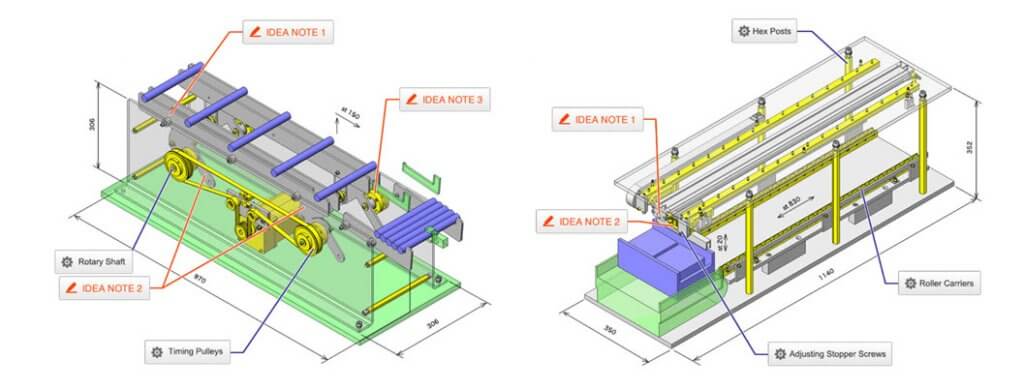
How to specify a shaft or post, step by step
Work through the decisions in this order. Each choice narrows the next: the material limits which heat treatments and finishes are available, and the finish and features affect which tolerance you can hold.
Choose the component type. Decide between a linear shaft, rotary shaft, or post by motion type, using the selection guide.
Pick the material. Match steel, stainless steel, or aluminum to load, environment, and weight.
Choose the heat treatment. Specify induction hardening where the shaft runs against bushings or bearings.
Select the surface finish. Balance corrosion resistance, wear resistance, and dimensional change.
Add machined features. Choose ends, grooves, flats, keyways, and threads, and check their effect on strength and hardness.
Set the fit and tolerance. Pick a tolerance class and fit type for the mating bushing, bearing, or bore.
Configure and order. Build the part in 1mm length increments and pull the CAD model from the inCAD Library.
Shaft and post material options: steel, stainless, and aluminum
MISUMI shafts and posts are offered in four base material groups. The table shows when to choose each and which components offer it.
| Material | Choose when | Linear shaft | Rotary shaft | Post |
|---|---|---|---|---|
| Bearing steel | Highest durability is needed and corrosion is controlled | Yes | No | No |
| Carbon steel | Good strength is needed and corrosion is controlled | Yes | Yes | Yes |
| Stainless steel | Corrosion resistance, food, clean room, or temperature swings | Yes | Yes | Yes |
| Aluminum | Light weight, conductivity, or reflectivity | Yes | No | Yes |
Terminology note: “bearing steel” here means high-carbon chromium steel such as 52100 bearing steel equivalent, a classic rolling-bearing grade with high hardness for heavy wear. The selection guide groups steels more broadly as carbon steel, alloy steel, and stainless steel. Check the product page for the exact grade.
Environment quick guide
| Environment | Material starting point | Finish to consider |
|---|---|---|
| Washdown / caustic cleaning | Stainless steel | Low-temperature black chrome (linear shafts) |
| Clean room | Stainless steel | Low-temperature black chrome or electroless nickel |
| Outdoor / high humidity | Stainless steel, or steel with a corrosion finish | Low-temperature black chrome or electroless nickel; anodize for aluminum posts |
| High temperature | Stainless steel; avoid anodizing where temperatures swing widely | Check the finish’s temperature limit first |
| Weight-sensitive moving assemblies | Aluminum, or hollow linear shafts | Anodize (posts) |
Stainless is not immune to rust. In MISUMI salt spray testing, 440C stainless steel showed rust after 168 hours because of its high carbon content, and low-temperature black chrome outlasted both 440C and plain 52100 bearing steel (source).
Heat treatment for hardening
Induction hardening heats the shaft surface with an induction coil and quenches it, producing a hard case over a tough, ductile core. MISUMI’s induction hardened shafts are specified at 56 HRC or more. Effective hardening depth grows with diameter, from more than 0.5 mm on small shafts to more than 1.0 mm at 25 to 30 mm diameters.
Hardening matters for linear shafts because the shaft must be harder than what rides on it. A softer shaft is marked by the balls in a linear ball bearing, which lowers the bearing’s rated load and shortens life.
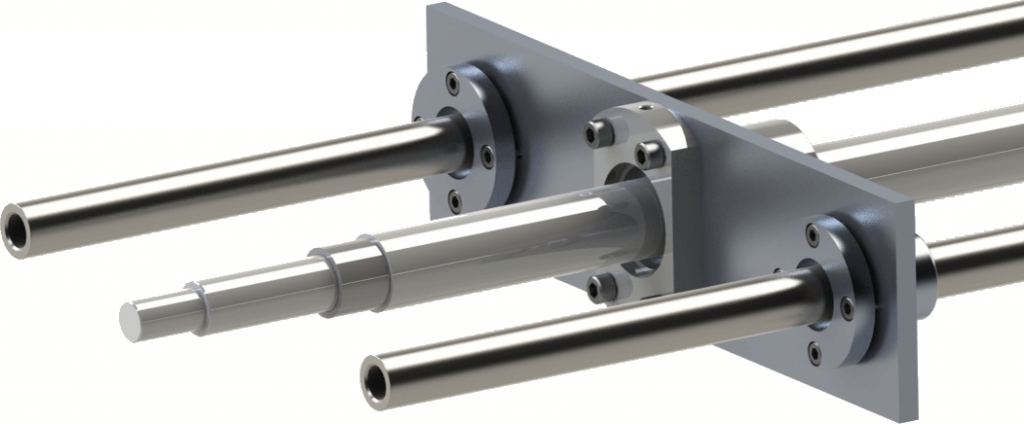
| Application | Does hardening matter? | Why |
|---|---|---|
| Linear shaft with linear ball bearings | Yes | The shaft should match the bearing hardness to avoid witness marks and rated-load loss |
| Linear shaft with plain bushings | Usually | The shaft should be significantly harder than the bushing; hard chrome plating is an alternative |
| Rotary shaft at bearing seats | Often | Resists wear and fretting at seats; check torque and fatigue loads |
| Static post | No | No sliding contact, so wear resistance is not a driver |
Machining removes the hardened case. Wrench flats, grooves, keyways, stepped ends, and threaded ends cut through or heat the hardened layer, so those areas are softer than the rest of the shaft. Keep bearing travel off modified zones.
Material and finish by operating environment
Finishes add corrosion or wear resistance to the base material. Availability is by component type; confirm each finish on the product page before ordering.
| Finish | What it does | Linear shaft | Rotary shaft | Post |
|---|---|---|---|---|
| Hard chrome plating | Wear and abrasion resistance on steel | Yes | No | No |
| Low-temperature black chrome | Exceptional corrosion resistance at high precision; about 1–2 µm coating | Yes | No | No |
| Black oxide | Mild corrosion resistance; reduces light reflection; no dimensional change, no peeling or chipping | No | Yes | Yes |
| Electroless nickel | Excellent corrosion resistance plus added hardness | Yes | Yes | Yes |
| Black or clear anodize | Improves corrosion and wear resistance of aluminum | No | No | Yes |
Surface finish comparison: corrosion, wear, and dimensional change
| Finish | Corrosion resistance | Wear resistance | Dimensional change | Best for |
|---|---|---|---|---|
| Hard chrome plating | Good against chemicals other than chlorides | Highest of the group; about HV750 on shafts | Adds plating thickness (minimum 5 µm on MISUMI shafts) | Dry, high-wear sliding against bushings |
| Low-temperature black chrome | Exceptional | Does not change base hardness or add lubricity | About 1–2 µm on linear shafts | Washdown, food, medical, semiconductor, optical (low reflection) |
| Black oxide | Mild | Low | None | Low-reflection parts in controlled environments |
| Electroless nickel | High | Moderate hardness increase | Uniform, controllable film | Corrosion protection and low friction |
| Anodize (clear or black) | Improved on aluminum | Improved on aluminum | Grows into and out of the surface; check the catalog | Aluminum posts |
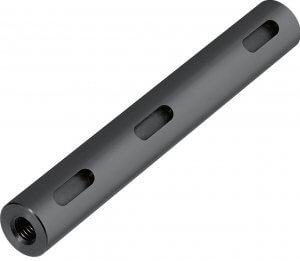
Pick the finish for the failure you are preventing. Use hard chrome when abrasion is the risk, low-temperature black chrome or electroless nickel when corrosion is, and anodizing for aluminum. Hard chrome can chip, while LTBC is flexible and does not flake, and its wear shows as metal beginning to shine through the black layer.
For process detail, read our guides to hard chrome plating, low-temperature black chrome plating, electroless plating, and anodizing.
Machined features and alterations
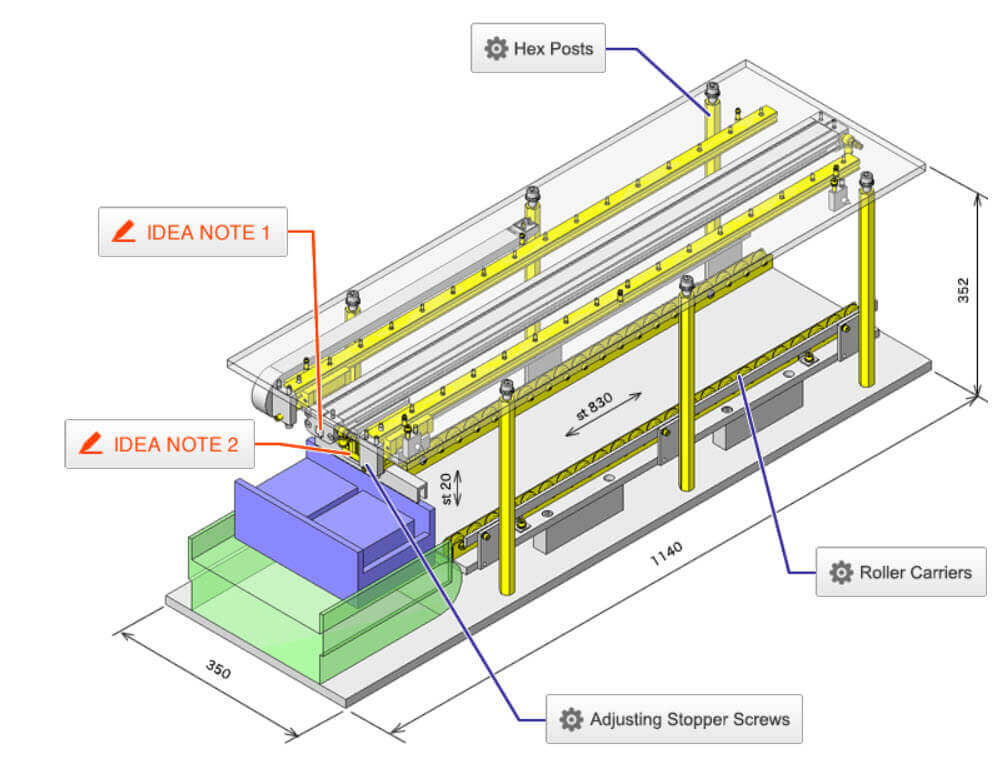
MISUMI manufactures configurable linear shafts, circular posts, and hex posts in its Ohio facility, and all three are configurable in 1mm length increments with expanded dimension ranges. Features by component type:
| Component | Typical features |
|---|---|
| Linear shafts | End treatments, retaining ring grooves, tapped ends, wrench flats, hollow options |
| Rotary shafts | Keyways, D-cuts, stepped ends, cross holes, threads |
| Posts | Male or female threads, through holes, hex, round, or square form, chamfers |
Design tips
- Treat keyways and cross-drilled holes as stress concentrators. They reduce fatigue life and must be accounted for in the shaft sizing calculation. Add a fillet radius where a keyway or step ends, and see machine keys for matching keys.
- Keep features away from the bearing zone. Grooves, flats, and threads soften the hardened case locally, so place them at the shaft ends, outside bushing travel.
- Specify the exact length. With 1mm increments you can order the length the design needs instead of cutting down a stock length, which preserves the finish and avoids rework.
- Consider hollow linear shafts. A hollow shaft uses less material and reduces the weight of moving assemblies, at a cost in bending stiffness.
Rotary shafts vs. drive shafts
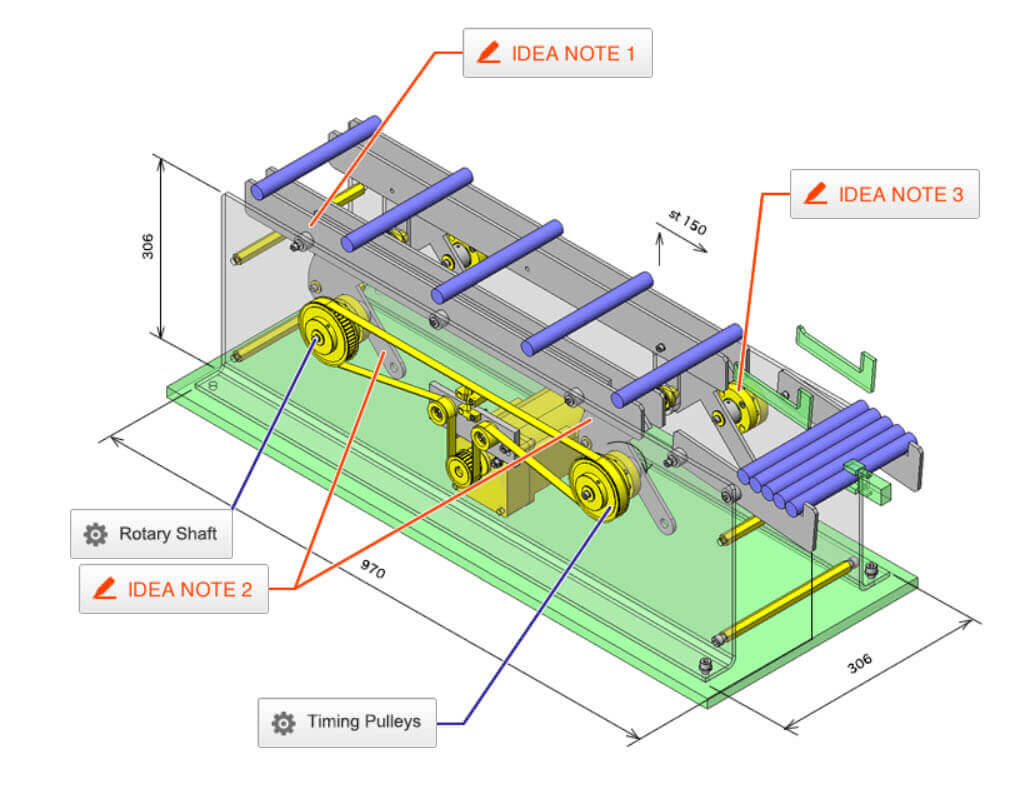
A rotary shaft transmits torque and power from a drive source to another component. A drive shaft is a precision version of a rotary shaft, made to tighter tolerances so it runs true at high speed. If your application runs near the shaft’s critical speed, tolerances and straightness matter more, because small imbalances grow into vibration. The selection guide explains how to size a rotary shaft and check critical speed.
| Rotary shaft | Drive shaft | |
|---|---|---|
| Use | General torque transmission | Precision, high-speed use |
| Tolerances | Standard | Tighter |
| Features | Keyways, D-cuts, stepped ends, cross holes, threads | Verify operating RPM against critical speed |
Setting the shaft tolerance class and fit
A fit describes the relationship between a shaft’s size and its mating hole’s size. The right fit depends on whether the shaft must slide, locate, or stay put.
| Fit | Definition | Typical use |
|---|---|---|
| Clearance | Shaft maximum is smaller than bore minimum; inserts freely | Sliding in a bushing |
| Interference (press) | Shaft and bore interfere across the whole tolerance zone | Press-fit into a plate |
| Transition | Either clearance or interference can occur depending on actual dimensions | Locating a shaft precisely |
Fits are written as a hole tolerance and a shaft tolerance. A capital letter marks the hole (H7) and a lowercase letter marks the shaft (h7). Using an H7 hole as the reference, a t6 shaft gives a strong interference fit, written H7t6. The shaft and hole tolerances guide includes the full hole-basis and shaft-basis fit tables.
Tolerance class for linear shafts
For higher precision, choose a tighter class such as h5 or h6, as covered in the selection guide’s sizing section. The MISUMI catalog lists h5, g6, h6, and f8 for linear shafts; confirm on the product page.
Use clearance fits where relative motion is needed, and interference fits where the shaft position must be precisely controlled, must carry load, or does not need to be disassembled. A transition fit works in between, where a small amount of movement is tolerable for easier assembly and disassembly. For bearing seats, see the rotary bearing fits guide, and for a broader treatment, see Fictiv’s article on clearance, transition, and interference fits.
Shaft and post specification checklist
Use this checklist before configuring a shaft or post.
- Component type confirmed (linear shaft, rotary shaft, post)
- Material chosen (steel, stainless steel, aluminum)
- Hardening specified if the part mates with a bushing or bearing
- Environment noted (washdown, clean room, humid, outdoor, high temperature)
- Surface finish chosen
- Diameter and length set in mm (1mm increments)
- Features (ends, grooves, flats, keyways, threads) kept outside the bearing zone
- Keyway or cross hole checked for fatigue
- Shaft tolerance class and mating hole tolerance set
- Fit type chosen (clearance, transition, interference)
- Operating RPM checked against critical speed (rotary shafts)
- CAD model downloaded from the inCAD Library
Frequently asked questions
What is the difference between stainless steel and hard chrome plated shafts?
Stainless steel resists corrosion throughout the material, while hard chrome is a thin wear-resistant plating over steel. Hard chrome plating on MISUMI shafts is about HV750 hardness at a minimum 5 µm thickness, so it protects against abrasion but can chip. Choose stainless steel for washdown or food use, and hard chrome for dry, high-wear sliding.
What surface finish should I use for a humid environment?
Low-temperature black chrome (LTBC) suits humid environments on linear shafts: in MISUMI testing at 95% humidity and 70°F for 1,000 hours, LTBC showed no corrosion. Electroless nickel is the other option for linear and rotary shafts and posts, and anodizing suits aluminum posts. Plain polished chrome-plated steel will oxidize once the plating is breached.
What is the difference between a clearance fit and an interference fit?
A clearance fit always leaves a gap, so the shaft slides or rotates freely in the hole. An interference fit always overlaps, so the shaft must be pressed in and then stays locked in place. A transition fit sits between the two and can produce either, depending on the actual manufactured sizes of the shaft and hole.
Do linear shafts need to be induction hardened?
Linear shafts that run against bushings or linear ball bearings should be hardened, because a shaft softer than its bearing wears and deforms. MISUMI induction hardened shafts are 56 HRC or more. Static posts and light-duty plain-bearing guides usually do not need hardening.
What does an H7t6 fit mean?
H7t6 is a hole-basis fit made from an H7 hole tolerance and a t6 shaft tolerance. It gives a strong interference fit, so the shaft is pressed into the hole and is not meant to be disassembled for maintenance. A capital letter denotes a hole tolerance and a lowercase letter denotes a shaft tolerance.
Can I use an aluminum rotary shaft?
No. Aluminum is offered for linear shafts and posts but not for rotary shafts. Rotary shafts transmit torque and carry bending and fatigue loads from keyways and overhung components, so they are specified in carbon steel or stainless steel. Use aluminum posts where light weight, conductivity, or reflectivity matters.
Configure and order
MISUMI configurable shafts and posts are made in the Ohio facility and configured in 1mm increments. Download CAD from the inCAD Library or start from RAPiD Design. Lead time is 1 to 7 days, and some linear shafts ship the next day.