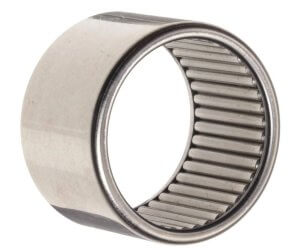

Most fasteners exist to clamp two parts together. A shoulder screw exists to do the opposite job just as often — to give something a precise surface to pivot, slide, or rotate around while a separate threaded tip does the clamping. That dual role is exactly why cam followers and pivot bushings are so often mounted on one. This guide covers shoulder screws, how their two-diameter design works, and where they show up in real machine designs.
What Is a Shoulder Screw?
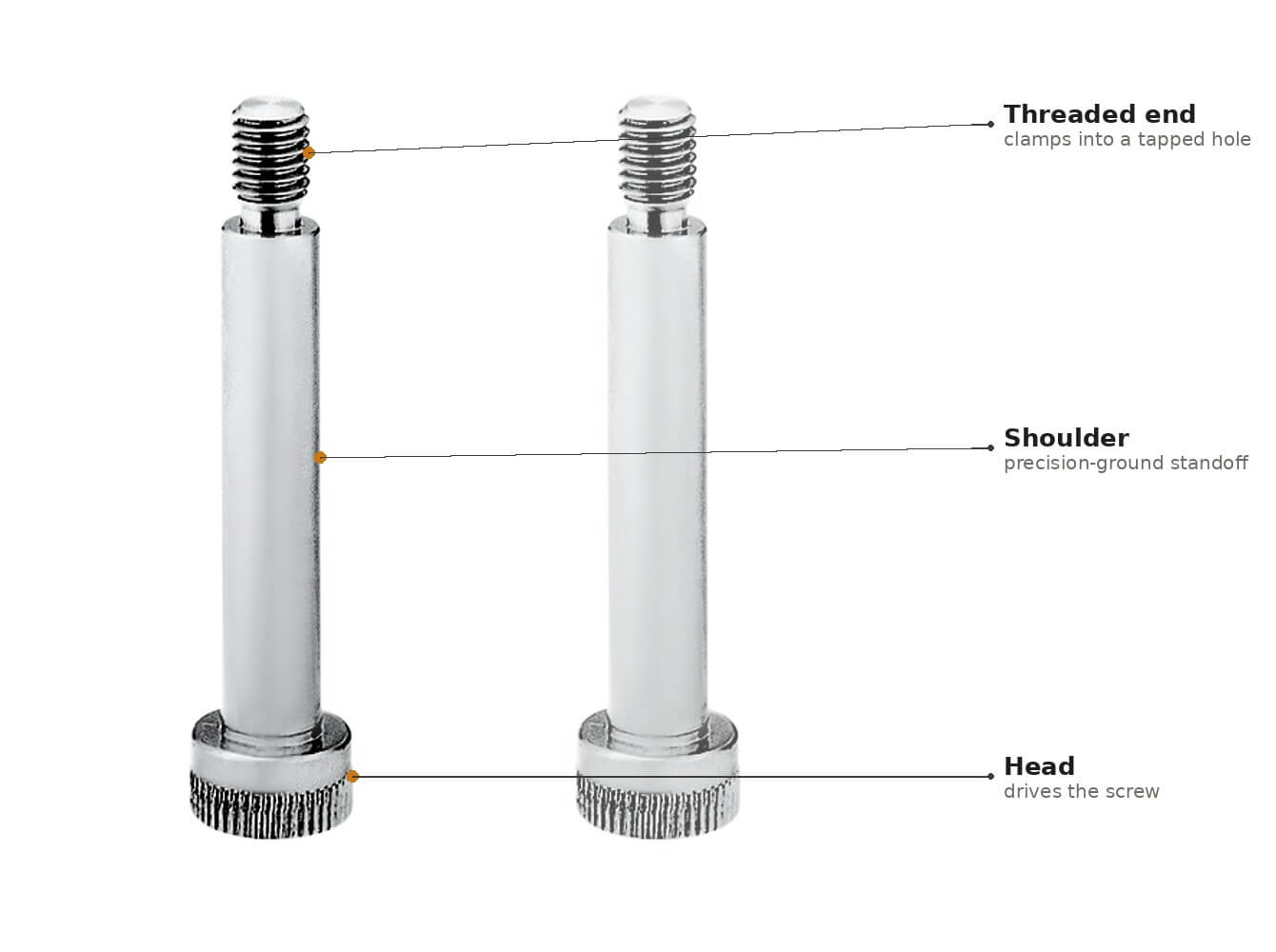
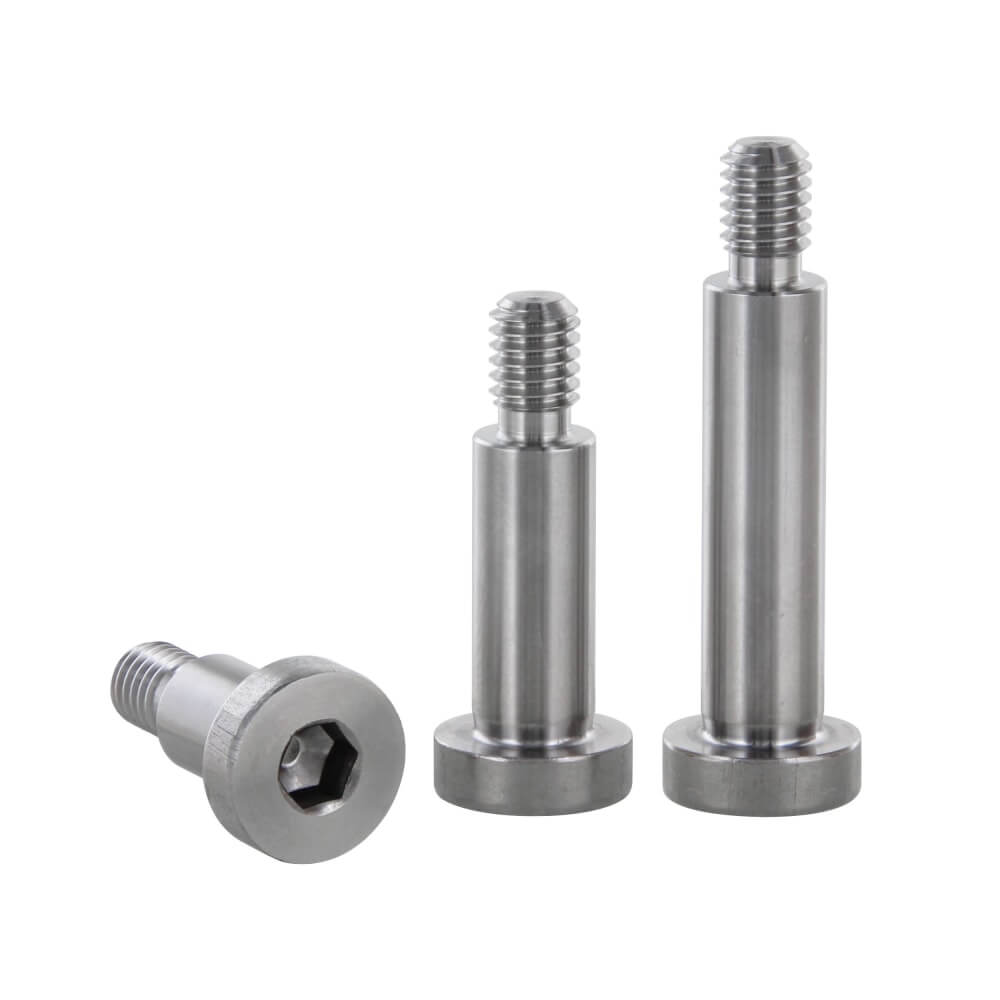
A shoulder screw (also called a shoulder bolt, a reamer bolt, or, in die and stamping applications, a stripper bolt) is a fastener built with two distinct diameters instead of one. Where a standard bolt is essentially the same diameter from head to thread, a shoulder screw steps down from a larger precision-ground shoulder to a smaller threaded tip.
Head
Drives the screw; common styles include socket (hex) head, hex head, and flat head, depending on clearance and access needs.
Shoulder
The precision-ground, unthreaded section. Its diameter and length are the working dimensions of the part.
Threaded Tip
Smaller in diameter than the shoulder, this section clamps into a tapped hole in the fixed part of the assembly.
How a Shoulder Screw Works
The core idea is separation of jobs. In a standard bolted joint, torque, thread engagement, and clamp force all act on the same diameter, so how tight you turn the bolt directly changes how hard the parts are squeezed together. A shoulder screw splits that relationship apart: the shoulder length, not the amount of torque applied, sets the standoff distance or pivot clearance between the head and the mounting face. Tighten the screw fully into its tapped hole, and the shoulder simply stops the head at a fixed, repeatable distance, letting a bearing, bushing, or lever rotate or slide freely on the shoulder without ever being clamped.
Shoulder Screw vs Socket Head Cap Screw
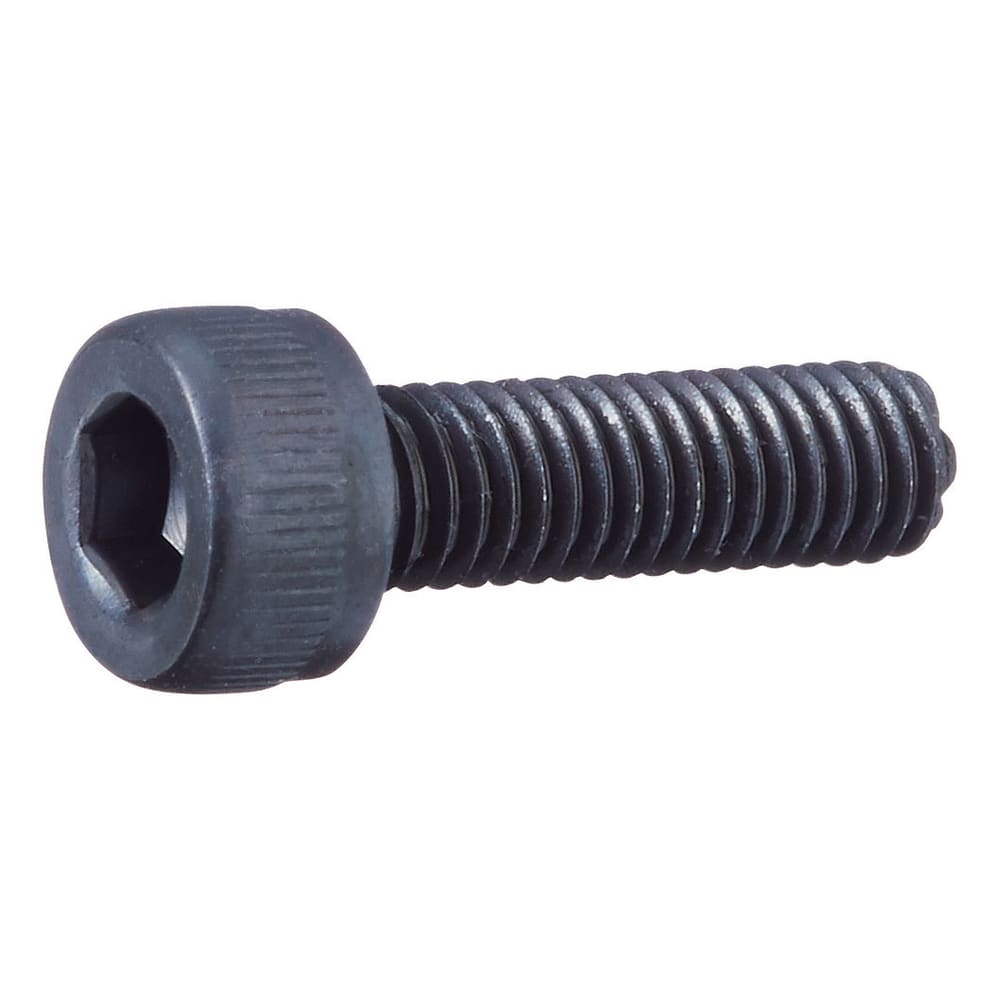
It’s easy to lump shoulder screws in with standard cap screws since many share a hex socket head, but the working geometry is different. A socket head cap screw is a single-diameter clamping fastener — the socket head version simply swaps the drive style for a lower-profile, tight-space-friendly recess. A socket head shoulder screw uses that same low-profile hex drive but keeps the two-diameter shoulder-and-thread construction, which is exactly why it’s favored in designs where a part needs to swing, slide, or pivot around it rather than be clamped by it.
Socket Head Cap Screw
Single diameter. Clamp force scales with torque. Used to join two parts.
Shoulder Screw
Two diameters. Torque sets clamp force on the thread only; the shoulder sets the pivot or standoff geometry.
Shoulder Diameter Tolerances
Because the shoulder often functions as a precision shaft, its diameter is manufactured to a defined tolerance class, not just a nominal size. MISUMI catalogs commonly offer shoulder screws in a few standard classes:
| Tolerance class | Fit character | Typical use |
|---|---|---|
| g6 | Close sliding fit | Precision pivots, bearing bores requiring minimal play |
| h7 | General locating fit | Standard mounting and locating applications |
| e9 | Looser running fit | Free-rotating components where clearance matters more than precision |
Choosing the wrong tolerance class is a common, avoidable mistake. A g6 shoulder in a bore sized for a looser fit can bind, while an e9 shoulder in an application that needs a tight pivot will introduce play that shows up as vibration or backlash downstream.
Side-by-Side Comparison
Shoulder Screw vs. Standard Bolt Comparison
| Factor | Standard Bolt | Shoulder Screw |
|---|---|---|
| Diameter profile | Single diameter | Two diameters (shoulder + thread) |
| Primary function | Clamp two parts | Provide a precision pivot or standoff |
| Effect of tightening torque | Directly changes clamp force on stack | Sets thread clamp only; shoulder length fixes standoff |
| Dimensional control | Thread size and length | Shoulder diameter tolerance and length |
| Typical use | General assembly | Pivots, rollers, bearings, stack-height control |
Common Shoulder Screw Applications
Linkages & Levers
Shoulder screws act as low-cost pivot pins for levers, latches, and swing arms without needing a separate shaft and retaining clip.
Bearing & Roller Mounting
A precision shoulder gives a ball bearing, bushing, or idler roller a controlled-diameter axle to rotate on.
Cam Followers
Stud type cam followers rely on the same precision shoulder principle, built directly into the follower’s stud.
Stamping & Die Work
Stripper bolts (a shoulder screw variant) control stack height between the stripper plate and die shoe through repeated press cycles.
Sliding Guides
Shoulder screws provide guide pins for sliding plates and covers where a fixed, repeatable clearance matters.
Standoffs & Spacers
The shoulder length sets a fixed, repeatable gap between two plates or panels without a separate spacer part.
How to Select the Right Shoulder Screw: Step-by-Step
Determine the shoulder diameter from the bore of the bearing, bushing, or hole it needs to fit or rotate within.
Set the shoulder length to match the required stack height, standoff, or clearance between the clamped faces.
Choose the tolerance class — g6 or h7 for a precise pivot or locating fit, e9 where the mounted part needs to rotate freely.
Confirm the thread size and torque limit against the transition point between shoulder and thread, not just the screw’s property class.
Select head style, material, and finish based on clearance around the head and the operating environment.
Frequently Asked Questions on Shoulder Screws
It’s used as a precision pivot shaft, axle, or standoff rather than a general clamping fastener. The smooth, ground shoulder gives a bearing, bushing, cam follower, or lever a controlled-diameter surface to rotate or slide on, while a smaller threaded tip clamps it into a fixed plate.
A regular bolt has one diameter, so tightening torque directly affects the clamped stack. A shoulder screw’s shoulder length sets the standoff or pivot clearance instead, so tightening it fully doesn’t crush the parts between the head and the mounting face.
The tolerance class (g6, h7, or e9) determines how tightly the shoulder fits a bore or how freely a component rotates around it. Tighter classes suit precise pivots and bearing bores; looser classes leave clearance for free rotation.
Yes — the small-diameter transition between the shoulder and threaded tip is typically the weakest cross-section, so maximum tightening torque is usually capped based on that transition point rather than the screw’s overall property class.
“Socket head” refers to the drive style — a hex socket recess driven with an Allen wrench — rather than a change to the shoulder’s function. The precision shoulder and its role as a pivot or standoff stay the same.
Common uses include pivot pins for linkages and levers, mounting axles for bearings, cam followers, and idler rollers, stripper bolts in stamping dies, and standoff or locating pins where a precise, repeatable clearance is required.