
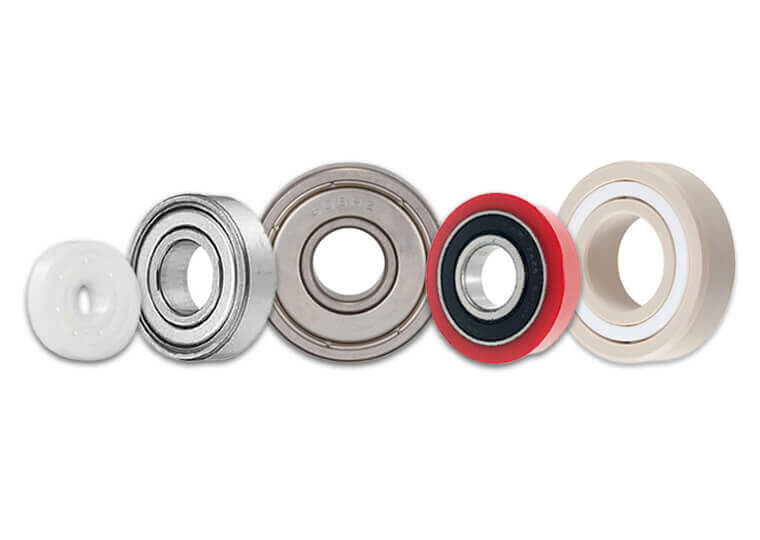
Selection of ball bearing material is a very important factor in the longevity and proper operation of your equipment and machinery. The most popular materials for ball bearings include steel, stainless steel, high-performance polymer (HPP), and ceramic. We will go over the benefits and shortfalls of each of these major materials, and identify the common industries and environments each are used in.
Steel
Steel material generally has high wear resistance and fatigue strength. It is the most common standard material for ball bearings used in manufacturing. With it’s strong strength at a very affordable cost, it makes sense that many applications will choose steel as the default material for most applications. However, steel is very susceptible to corrosion and rust, so it will not be a good choice in wet environments or near chemicals.
The best industries to use steel material in is general manufacturing, EV, warehouse automation, and packaging.
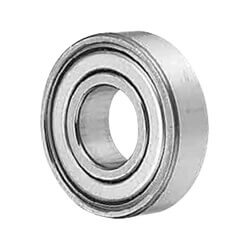
Stainless Steel
Stainless steel is an alloy of iron that is resistant to rusting and corrosion. It typically contains 11% chromium, which is the component that is providing its corrosion resistance. The luster and resistance to corrosion, are very common reasons for its selection in industrial applications. Although it still retains a fairly strong strength and wear resistance, stainless steel will generally have lower strength than steel due to its higher carbon content. (Wikipedia) With its corrosion-resistant properties, stainless steel would be an ideal choice of bearing material in wet or applications involving chemicals.
The best industry and environment to use stainless steel would be medical, laboratory, food, or general wet environments.
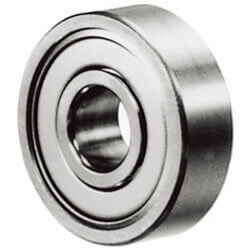
High-Performance Polymer (HPP)
High performance polymers (HPP) are plastics that meet higher requirements than standard or engineering plastics. HPP’s differ from standard plastics primarily by their higher thermal stability, outstanding chemical resistance, and superior product quality. (Performance Plastics) Common types of HPP include PEEK, PTFE (Teflon®), and UHMW. HPP bearings provide some of the strongest chemical resistances and allows usage of low-viscosity lubricants or no lubricant at all. Additionally, HPP bearings are electrical insulators and prevents the unwanted travel of electricity. The biggest shortfall of HPP bearings would be its reduced strength and allowable rotation speeds compared to its steel counterparts.
Some of the best industries to use HPP bearings would be semiconductors, medical, and various clean environments.
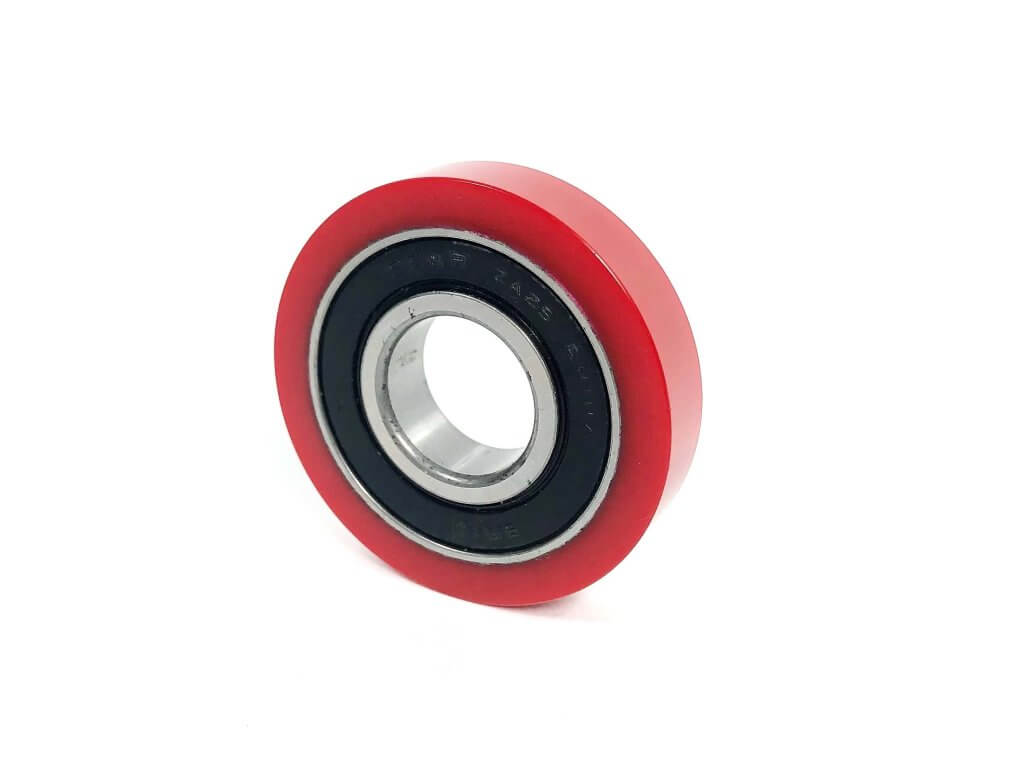
Ceramic
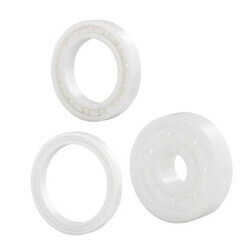
Ceramic bearings are comprised of ceramic rolling elements (balls) enclosed in a ferrous (typically steel) inner and outer race. (Emerson Bearing) Ceramic bearings are a fairly niche material choice for ball bearings, however, they provide great benefits including reduced weight, rolling resistance, thermal expansion, and typically being able to run without lubricant. One of the largest disadvantages of ceramic bearings would be its increased cost compared to the other materials and its lower load capacities.
Some common uses for ceramic bearings would be in electric motors, aerospace applications, performance racing vehicles, laboratory equipment, under water applications. (Boca Bearings)
To assist you in finding your bearing, MISUMI has developed the Bearing Finder! Find your bearings here.
Works Cited
Boca Bearings. n.d. <https://www.bocabearings.com/general/full-ceramic-and-ceramic-hybrid-bearings#:~:text=Ceramic%20hybrid%20bearings%20are%20widely,ideal%20for%20ceramic%20hybrid%20bearings>.
Emerson Bearing. 2023. <https://www.emersonbearing.com/products/ceramic-bearings/#:~:text=Ceramic%20bearings%20are%20comprised%20of,often%20operate%20in%20hybrid%20capacities>.
Performance Plastics. 4 November 2021. <https://performanceplastics.com/blog/what-is-a-high-performance-plastic/>.
Wikipedia. 6 June 2023. <https://en.wikipedia.org/wiki/Stainless_steel>.