
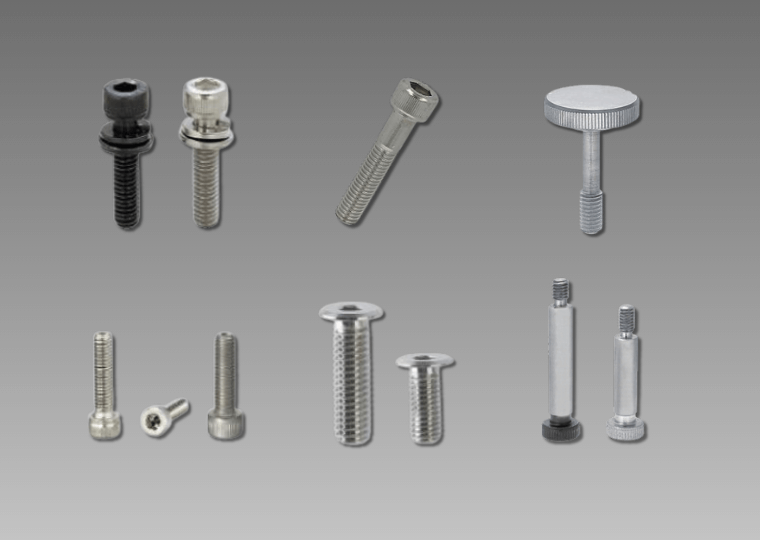
To select the right material for your application, the best place to start is by understanding the different chemical compositions and grade classifications.
Specifically, this article breaks down the difference between 18-8 and 18-10 stainless steels, explores material grades 304, 303, and 316, and helps clarify how composition impacts characteristics like corrosion resistance, weldability, and machinability.

18-8 Stainless Steel Composition
18-8 stainless steel composition contains 18% chromium and 8% nickel.
Its composition affects the corrosion resistance and formability of the material. Chromium binds oxygen to the surface of the material, which forms chromium oxide to protect the material from oxidation or rust. Nickel enhances corrosion resistance and increases toughness.
304 Stainless Steel Grade
304 stainless steel is a material grade of the 18-8 stainless steel composition group, and it contains 18-20% chromium and 8-12% nickel.
304L and 304H are other variations of 304 stainless steel. The difference is in the carbon content:
- 304L is the low carbon version (0.03% max)
- 304H is the high carbon version (0.04-0.1%)
304 stainless steel grades are often used in kitchen and household appliances, chemical, textile and paper, and nuclear and renewable energy industries.
303 Stainless Steel Grade
Another material grade under the 18-8 stainless steel composition group is 303, which contains 17-18% chromium and 8-10% nickel.
In addition, it contains at least 0.15% sulfur, which improves machinability due to reduced friction and makes the material easier to cut, drill, and shape.
Applications that commonly use 303 stainless steel include automotive, aerospace, and food processing.
Comparing 304 and 303 Stainless Steel Grades
Here is a quick overview of the differences between 304 and 303 stainless steel grades.
| 304 Stainless Steel | 303 Stainless Steel |
| More ductile | Less ductile |
| More corrosion resistant | Less corrosion resistant |
| Widely available | Less widely available |
| Higher machining cost | Lower machining cost |
Other material grades that fall under this include 301, 302, 304H (high carbon), and 304L (low carbon). To help differentiate between 3034H and 304L, here’s a breakdown:
- Low carbon content in 304L leads to superior weldability and intergranular corrosion resistance.
- 304H is good for high-temperature applications due to increased strength at higher temperatures.
18-10 Stainless Steel
18-10 material composition refers to stainless steels with 18% chromium and 10% nickel. The additional nickel provides rust and corrosion resistance properties.
316 Stainless Steel Grade
Known as the “marine grade” of the 18-10 stainless steel group, 316 is made of 16-18% chromium and 10-14% nickel.
It also contains 2-3% molybdenum, which improves corrosion resistance within harsh environments, particularly in marine, chemical processing, and food processing applications. It’s also known for its improved heat tolerance.
Keep in mind that 316 stainless steel grades have lower formability compared to other stainless steels. Additionally, it also comes with higher raw material and machining costs.
Other variations include:
- 316L (low carbon)
- 316 (high carbon)
- 316F (free machining)
- 316N (high nitrogen)
18-8 vs 18-10: A Quick Comparison
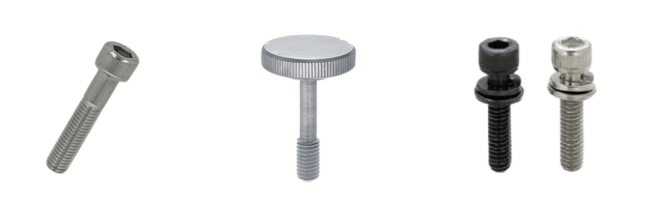
18-8 and 18-10 are material compositions, and 304, 303, and 316 are material grades that fall under these compositions.
To help you select the right material, here is a quick overview of the material compositions and groups, plus the benefits of each.

*High-carbon versions of stainless steel such as 304H and 316H will have increased strength at higher temperatures compared to the standard and low carbon versions
**Low-carbon versions of stainless steel, such as 304L and 316L, will have the highest weldability compared to the standard and high-carbon versions.
Find the Right Fastener for Your Application
For more information on fastener types and materials, check out this Guide to Fasteners for Industrial Automation and Specialty Fasteners Every Mechanical Engineer Should Know.
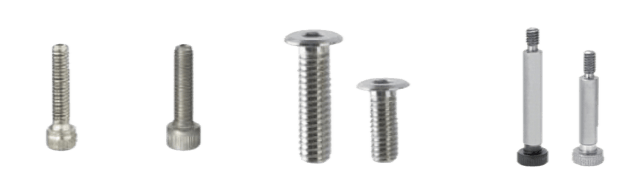
MISUMI is home to hundreds of configurable stainless steel fasteners. Choose the type of fastener you need and configure size, feature, style, and more. Cleanroom-ready options are also available.