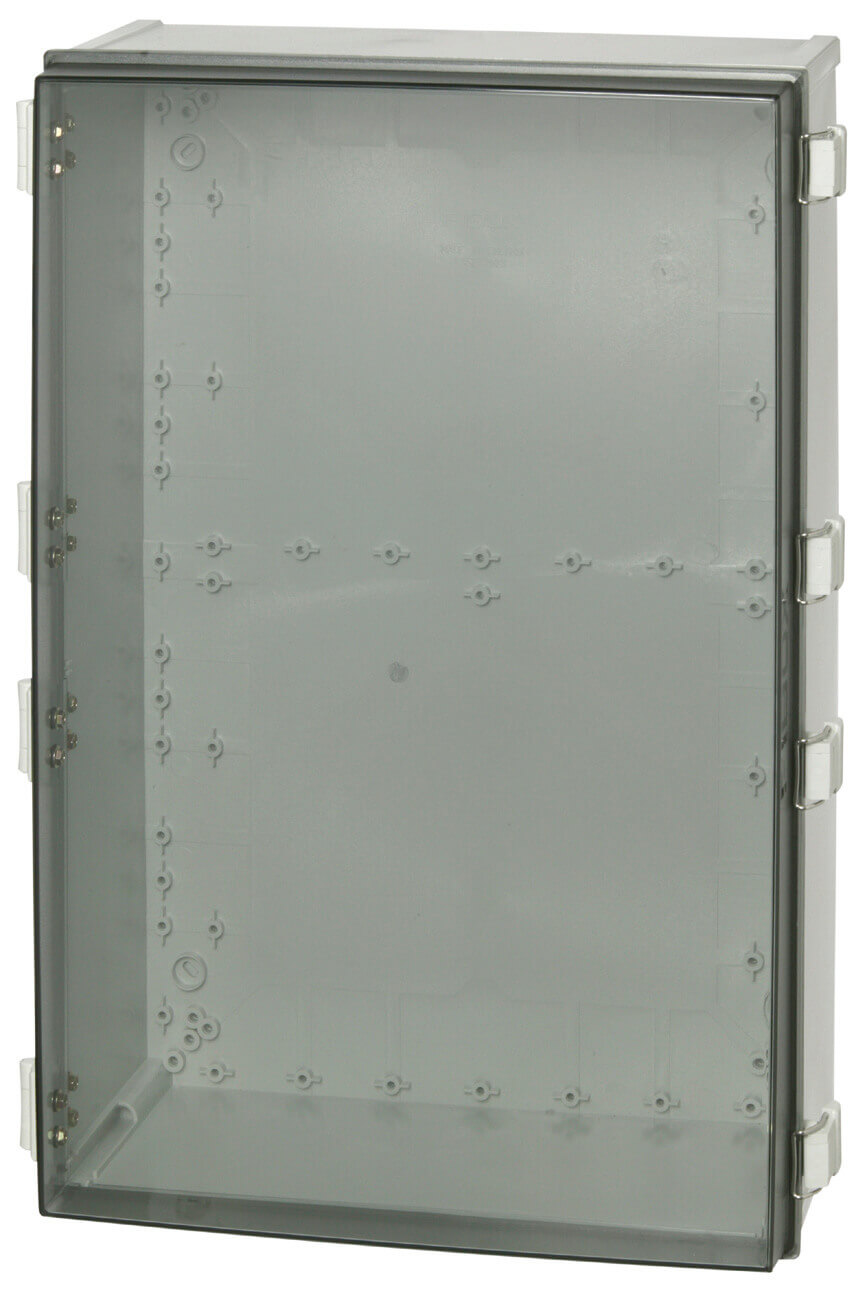

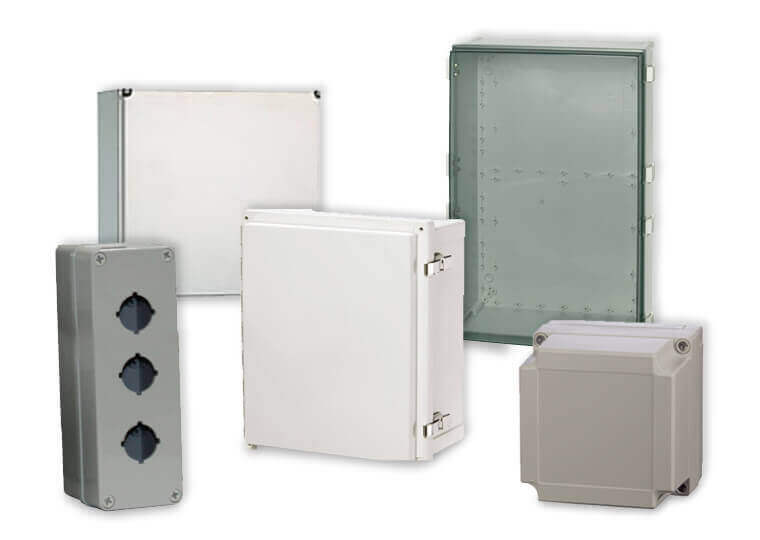
The main use of polycarbonate electrical enclosures is, as the name implies, to enclose and protect your control equipment.
However, there are further benefits to using them. You can also catch up on our blog series of “Finding the Right Enclosure” by reading Part 1 and Part 2.
1. Impact Resistance
Polycarbonate can withstand an impact of over 900 psi and is about 200 times stronger than steel. It will flex and return to its original shape without denting.
2. Elemental Resistance
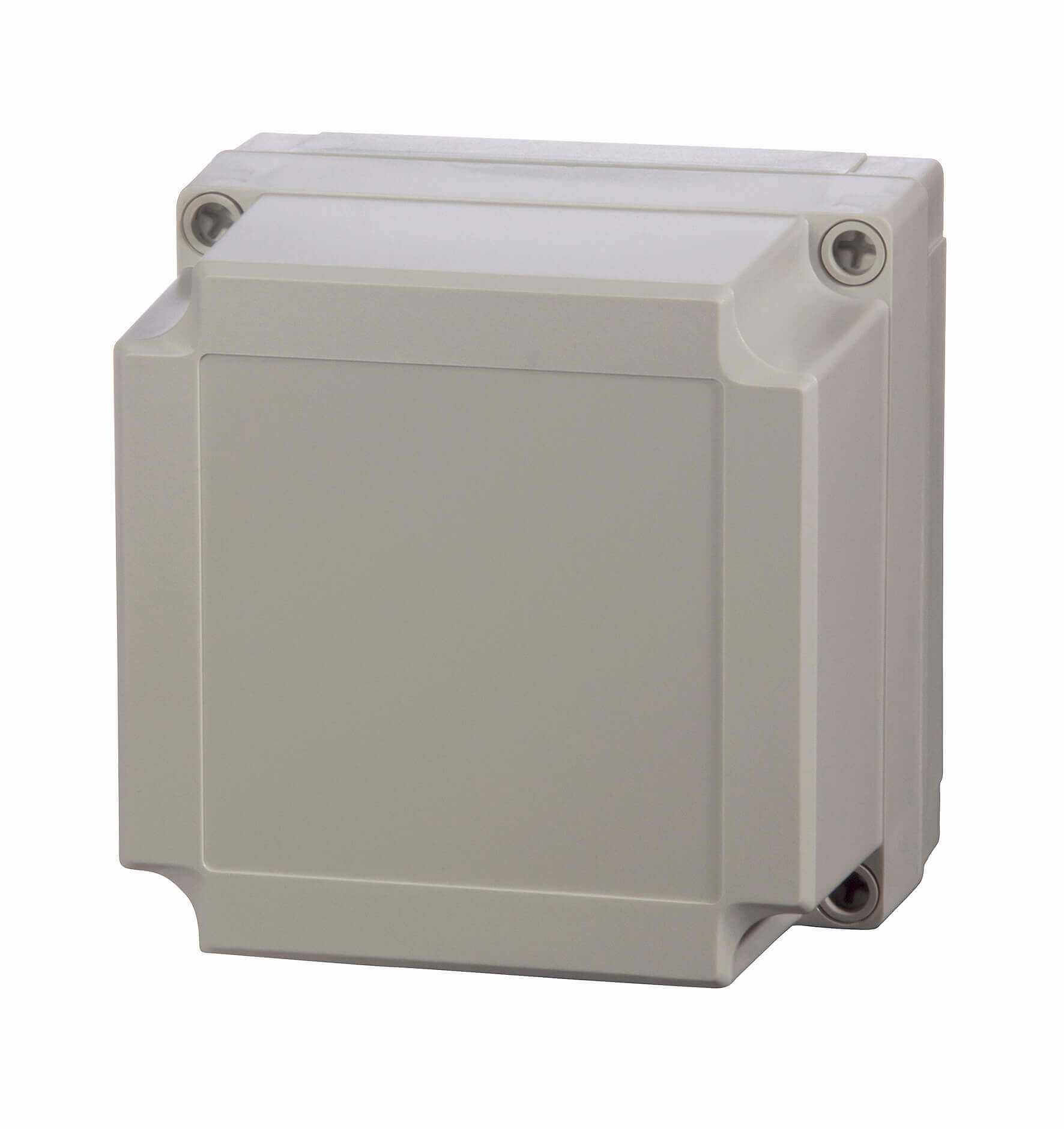
Polycarbonate is non-conductive, which is useful for creating a neutral environment for housing electrical components.
Polycarbonate is also resistant to corrosion and will not easily wear down or crumble due to weather. It is especially effective in wetter environments.
When exposed to UV light for long periods of time, the color of fiberglass will fade. Ultraviolet rays can break down the chemical bonds of the dyes in an object. Manufacturers like Fibox use a specially formulated plastic with UV inhibitors to withstand prolonged sun exposure.
Some electronics may need to send and receive radio signals. Depending on the material, these signals can pass through or be blocked. Polycarbonate enclosures can let EMF and RFI waves pass, while metal can block them.
3. Ease of Modification
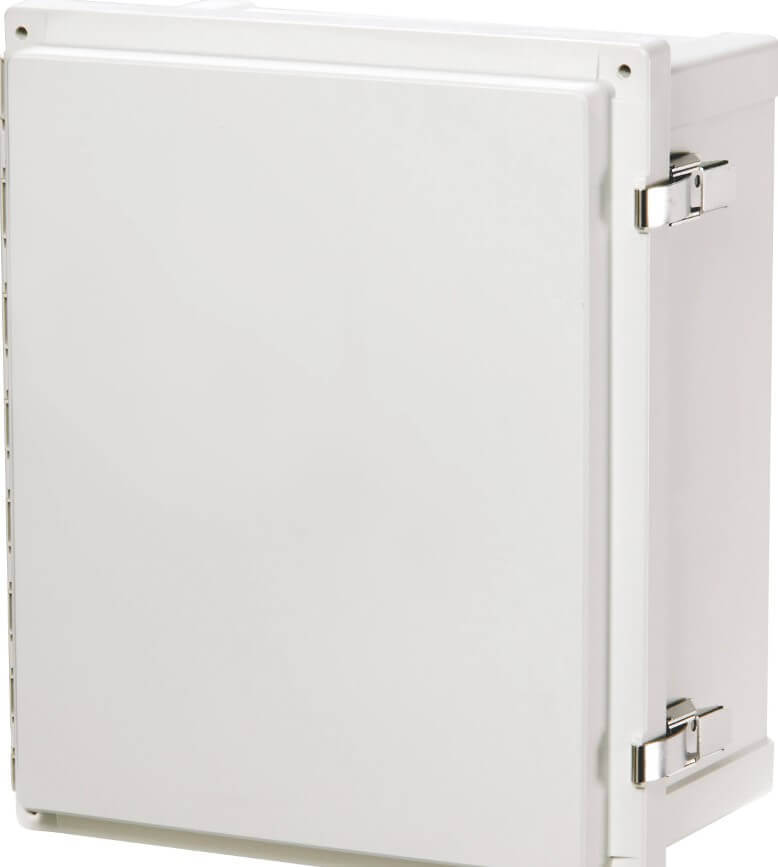
Polycarbonate is easy to modify, as electrical enclosures will need to be cut and drilled into for installation and setup. Cutting into metal produces sharp corkscrew pieces that can irritate the eyes. Inhaling the dust can also cause respiratory issues. Similarly, cutting fiberglass can produce splinter-like jagged edges, as it is composed of layers of resin and glass fibers.
Modifying polycarbonate produces larger specks of material that are too heavy to become airborne. These specks will not irritate the skin and can be easily swept up or vacuumed. When cutting into polycarbonate, one can ensure a clean cut with little to no chipping or cracking.
4. Lightweight and Cost-Effective
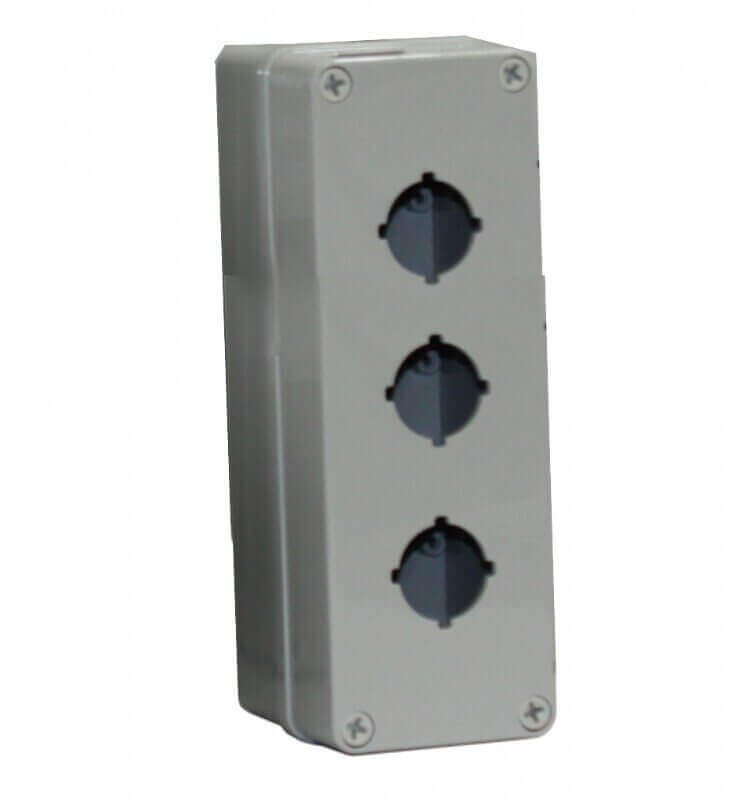
The costs associated with higher weight can go well beyond the initial shipping costs from the supplier’s warehouse until the unit arrives at its destination. Shipping, logistic, and installation costs can quickly increase the overall product cost.
As polycarbonate is light, the factors above can contribute to creating a final product that is more cost-efficient.
Comparison of Materials for Electrical Enclosures
| Material | Electrical Insulation | Durability | Weight | Cost | Heat Resistance | Ease of Fabrication |
| Polycarbonate | Very High | High | Low | Medium | High | High |
| Acrylonitrile butadiene styrene (ABS) | High | Medium | Low | Medium | High | Very High |
| Aluminum | Low | Very High | High | High | Very High | Medium |
| Stainless Steel | Low | Very High | Very High | Very High | Very High | Low |
| PVC | High | High | Low | Medium | Medium | High |
Is Polycarbonate the Right Choice?
While Polycarbonate has many advantages, there are some disadvantages that it can have depending on the nature of your upcoming project. There may even be scenarios where choosing metal or fiberglass is preferrable and worth investing in.
Polycarbonate has a limited resistance to flammability and can warp and expand if exposed in hot climates. It is also susceptible to scratches and surface-level damage. If vandalized, cleaning may be difficult and might require total replacement of the unit, as it can be sensitive to chemicals and cleaning agents.
Regarding chemical resistance and corrosion on metal surfaces, there are additional treatments that can be added to lessen the wear.
One may even opt for aluminum, which is resistant to corrosion. Fiberglass is also not as sensitive to chemicals and cleaning agents as polycarbonate.
Ultimately, evaluating the unique requirements of your application will ensure the optimal selection of enclosure material.
MISUMI has a variety of electrical enclosures from brands including FIBOX, Nitto Kogyo, and Takachi. Explore more enclosures below.